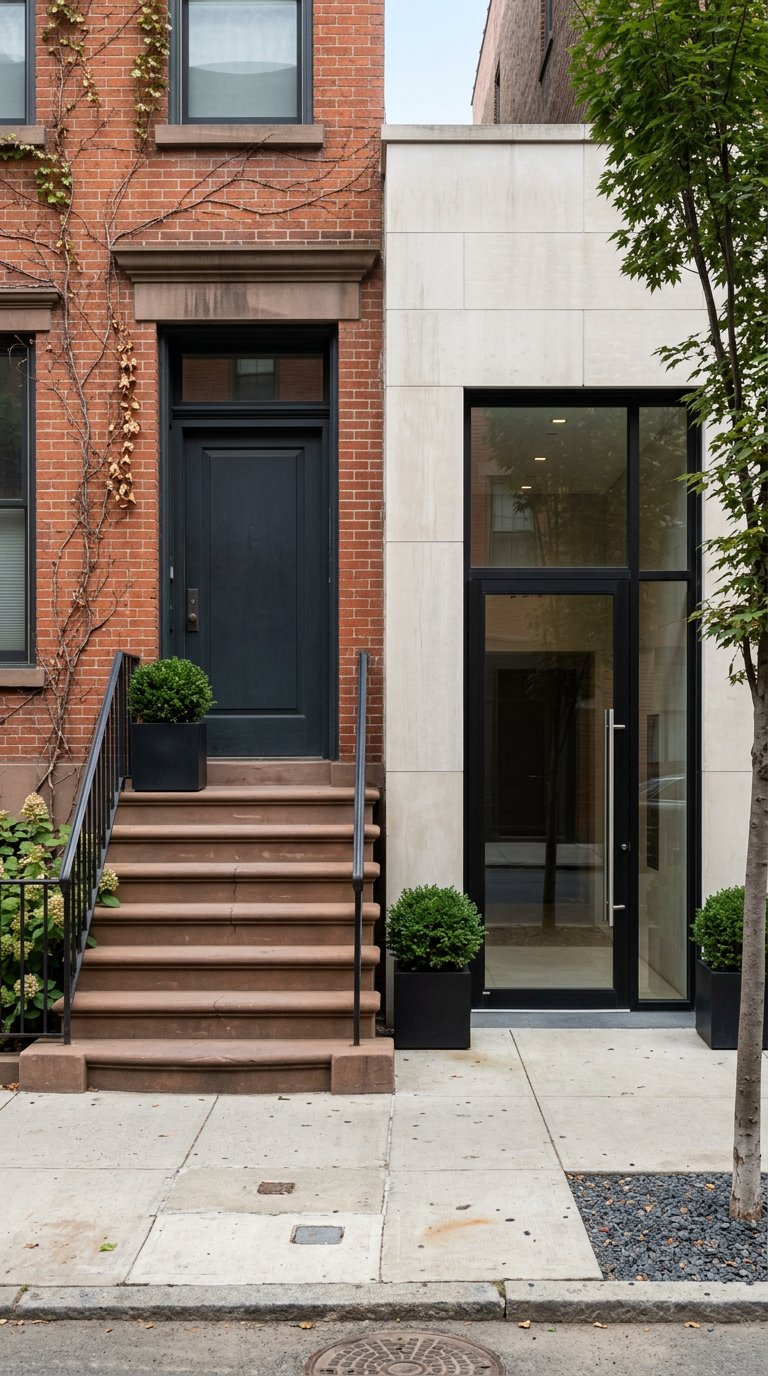
You know Brooklyn’s brownstones and new towers each promise a different kind of New York. The hard part is choosing which one fits your life, budget, and long-term plan. You want clarity on total monthly costs, renovation control, and how financing works before you commit. In this guide, you’ll learn how taxes, closing costs, building rules, and market patterns differ so you can compare a townhouse and a condo with confidence. Let’s dive in.
How to frame your choice
A townhouse gives you more private space, direct control of the exterior, and often ground-level outdoor areas. You absorb capital projects yourself and manage contractors on your timeline. Liquidity can be slower, and renovations may face extra steps in landmarked areas.
A condo centralizes building upkeep and amenities, which can simplify day-to-day living. You share repair costs through common charges and are subject to building rules and financial health. Financing can be straightforward if the building qualifies for conventional programs, and resale pools are often broad.
Market context in Brooklyn
Brooklyn has two parallel dynamics. Brownstone neighborhoods concentrate townhouses with tight inventory and premium pricing per property. Waterfront and new-development corridors concentrate condos with amenity-driven pricing and a wide range of monthlies. Recent reporting places borough medians around the one million mark, with notable premiums for both brownstone townhouses and luxury new-development condos in North and Downtown Brooklyn. Your best comparison is hyper-local: match a townhouse in Park Slope or Cobble Hill to a similarly sized condo in Downtown Brooklyn, DUMBO, or Williamsburg, then run the full monthly and closing-cost picture.
Monthly carry and maintenance
Condo monthly carry
- Common charges (HOA dues)
- Unit property taxes (if billed directly)
- HO-6 insurance
- Mortgage principal and interest
Common charges vary by amenities and staffing. A simple rule of thumb used locally is about $1 to $2+ per square foot per month in many Brooklyn buildings, with higher figures in full-service towers with pools and staffed lobbies. Always request the current budget, reserve study, and recent financials to see if monthlies are likely to rise.
Townhouse monthly carry
- Property taxes
- Homeowner insurance (structure and lot)
- Utilities
- Maintenance and capital reserve line (roof, façade, mechanicals, foundation)
- Mortgage principal and interest
You control the building envelope and timeline, which is a benefit. You also carry concentrated risk. Plan for routine upkeep plus episodic projects like roof, masonry, or boiler.
Insurance differences
Condo owners carry HO-6 policies that cover the interior, personal property, and liability. The association’s master policy covers common elements and, depending on the policy type, some fixtures and finishes. Townhouse owners need broader homeowner coverage for the structure and land. Clarify master-policy coverage and deductibles so you can set the right HO-6 limits and consider loss-assessment coverage if needed. See an overview of condo vs co-op insurance basics from a local specialist at Gotham Brokerage.
Taxes and closing costs
Property tax classes and assessments
NYC taxes townhouses and condos differently. Most one to three family homes fall in Tax Class 1. Most condos fall in Tax Class 2. For tax year 2026, the City lists Class 1 at 19.843 percent and Class 2 at 12.439 percent. The impact is driven by each class’s assessment method and statutory caps, not just the rate. Class 1 typically uses a 6 percent assessment ratio with caps on annual increases. Class 2 uses a 45 percent assessment ratio that can phase in. Look up any address on the Department of Finance site and review how assessed value is calculated and capped. Start with the City’s pages on property tax rates and how assessed value is determined.
Transfer taxes and the mansion tax
Both the City and the State charge transfer taxes at closing. In addition, New York State applies an additional tax commonly called the mansion tax on residential purchases of 1,000,000 dollars or more, with higher brackets for larger price bands. These are one-time costs that can be significant on higher-priced deals. Review the City’s guidance on the Real Property Transfer Tax, then ask your attorney to model buyer vs seller customary payments for your price point.
A simple way to estimate your cash due at closing:
- Add your down payment.
- Add City and State transfer taxes (based on price and property type).
- Add the State’s mansion tax if your price is at or above 1,000,000 dollars.
- Add lender, title, recording, and attorney fees.
What buyers typically spend to close
Financed condo purchases in NYC often land in the low single-digit percentages of price for buyer closing costs (commonly 3 to 6 percent). One to three family houses can be lower depending on loan type and taxes due. Exact figures vary with down payment, mortgage recording tax, and whether the mansion tax applies. For a useful overview of common buyer line items, see this guide to navigating NYC closing costs.
Ownership, rules, and renovation
Landmarks and permits for townhouses
Many Brooklyn townhouses sit in Landmark Preservation Commission districts. Exterior work like stoops, brownstone repairs, window and door changes, and roofline modifications often requires permits and LPC approval, which can extend timelines and add cost. Check a property’s status and permitting basics on the NYC LPC site before you plan exterior scope.
Party walls and neighbor access
Attached townhouses often share party walls. Major work like vertical expansions, underpinning, or roof projects can require party-wall agreements, neighbor access arrangements, pre-construction surveys, and DOB filings with engineered protection plans. Build time and legal cost into your budget. For a primer on party walls and construction coordination, review this guide from an architecture firm on party-wall considerations.
Condo rules that affect use and rentals
Condo declarations and bylaws may limit subletting, short-term rentals, or require minimum owner-occupancy ratios. The building’s financial and legal profile also affects lending eligibility. Ask for the resale package, bylaws, board minutes, and any litigation disclosures, then confirm lender views on the project. For a plain-English overview of how lenders look at condos, see this summary of Fannie Mae’s condo guidelines and reserve expectations.
Financing differences that matter
Condos and project warrantability
Many lenders perform a project review for condos. A building may be considered warrantable if it meets thresholds for owner-occupancy, budgeted reserves, insurance coverage, commercial space exposure, developer control, and litigation. If a project falls outside those bounds, you may face higher rates, bigger down payments, or fewer loan options. Ask your lender early whether the building is eligible under conventional or FHA programs. Learn more about project-level condo reviews and standards.
FHA and single-unit approvals
FHA allows project approvals and certain single-unit approvals when the broader building is not approved, subject to owner-occupancy, reserves, and insurance tests. Confirm with your lender’s FHA team whether a specific unit can qualify. Start with HUD’s overview of FHA single-family programs.
Townhouses and 2 to 4 unit loans
One to three family townhouses are often financed like single-family homes. If you plan to live in one unit of a two to four unit property, lenders apply specific rules for counting rental income and required reserves. Investors see different LTV and DSCR thresholds than owner-occupants. Ask how much rental income your lender will count and what reserves they require. Here is a clear explainer on 2 to 4 unit mortgage loans.
Resale and rental considerations by submarket
Townhouses in brownstone neighborhoods appeal to buyers who value privacy, multi-level layouts, and neighborhood continuity. Inventory is limited and prices vary widely property to property. Condos in waterfront and new-development hubs tend to draw buyers who want amenities, staffed buildings, and maintenance-light living. New-development condos can show strong appreciation in areas with growing transit and job nodes, but watch common charges and tax abatements as these can shape long-term carrying costs. If you plan to rent out, townhouses can offer higher gross yields with more active management, while condos can provide smoother day-to-day operations with exposure to building rules and association health.
Side-by-side decision checklist
Use this quick framework to compare a target townhouse and a target condo in adjacent neighborhoods.
- Purchase price and usable square footage (compare price per square foot and total monthly carry, not just list price)
- Property taxes (confirm Tax Class and assessed value method on DOF portal)
- Monthly common charges vs a townhouse maintenance reserve line
- Insurance (HO-6 for condo with loss-assessment coverage as needed vs homeowner policy for townhouse). See Gotham Brokerage’s primer
- Utilities and routine maintenance estimates
- Building reserves, recent or planned capital projects, and any special assessments (condo)
- Landmark status, DOB filings, party-wall agreements, and access needs for any planned work (townhouse). Check NYC LPC guidance
- Building rules that affect rentals and resale (condo bylaws, minutes, delinquency rates, litigation). Review condo underwriting factors
- Lender requirements (condo warrantability, FHA or conventional options, 2 to 4 unit rules). See FHA basics and 2 to 4 unit loan guidance
A simple pro forma you can build today
Create a two-column comparison for one condo and one townhouse you like. Plug in conservative assumptions.
- Mortgage P&I: quote today’s rate with a realistic down payment.
- Property taxes: pull the latest bill and confirm Tax Class. Review tax rates and assessment method.
- HOA common charges vs townhouse maintenance reserve: for the condo, use the current schedule and add a buffer for potential assessments. For the townhouse, set aside a monthly amount based on the building’s age and condition.
- Insurance: HO-6 for condo (check master-policy deductibles) vs homeowner policy for townhouse.
- Utilities and routine maintenance: estimate based on recent bills or contractor input.
- If renting is part of your plan: add a vacancy allowance and a property-management fee.
When you total these lines, you see your true monthly carry today and your exposure to future increases.
Bottom line
- Choose a townhouse if you value privacy, control, and outdoor space, and you are comfortable managing capital work and timelines. You may capture premium resale appeal in classic brownstone corridors, with a more hands-on ownership style.
- Choose a condo if you want lower day-to-day maintenance, amenities, and access to a broad buyer pool. Anchor your decision in building finances, reserves, rules, and lending eligibility.
Ready to run the numbers on homes you already love and pressure-test a pro forma? Connect with the Luxury Alliance Team to compare listings side by side, review building documents, and map a purchase plan with clarity.
FAQs
What are the biggest cost differences between a Brooklyn townhouse and a condo?
- Condos add common charges and rely on building reserves while townhouses skip HOA dues but require a private maintenance reserve for exterior and systems.
How do NYC property taxes differ for townhouses vs condos?
- Most townhouses are Class 1 and most condos are Class 2, and each class uses different assessment ratios and caps that can change your effective bill.
What should I review in a condo’s financials before buying?
- Request the budget, reserve study, audited financials, insurance declarations, board minutes, delinquency and assessment history, and any litigation disclosures.
How do landmarks and party walls affect Brooklyn townhouse renovations?
- Landmark districts often require LPC approvals for exterior work and party-wall projects may require neighbor agreements, access, and DOB-engineered protections.
What does condo warrantability mean for my mortgage options?
- Lenders review building occupancy, reserves, insurance, commercial space, control, and litigation; non-warrantable projects can limit loan products or raise costs.